
HORIZON INTERNATIONAL SOLUTIONS SITE
Working to Find and advance solutions to environment, health, poverty, and development problems
Around the world, extreme weather events are causing the public and scientists to ask, " What is happening to our world?" Torrential floods in Mokwa, Nigeria in 2025 killed more than 700 people as water raged through the center of the city. Ferocious fires still underway today in southwest France have caused more than 300,000 people to evacuate their homes. Extreme droughts "in Ethiopia, Kenya, and Somalia have left 23 million people without reliable access to food and water," according to Islamic Relief Canada.
Such extreme "weather events' are attributed by scientist all over the world as caused by climate change. They now warn that climate change is happening faster than any previous estimates indicated.
On the 18th of June 2026, the United Nations warned that "Millions of people already facing hunger, displacement and economic hardship could soon face another major climate shock... as extreme weather risks are intensifying across some of the world’s most vulnerable regions."
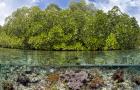
On October 22, 2013, news coming from the 3rd International Marine Protected Areas Congress (IMPAC 3) reported that Dr. Sylvia Earle, Mission Blue and the International Union for Conservation of Nature (IUCN), have launched 31 new Mission Blue Hope Spots -- places of special significance in the ocean where Mission Blue will focus its efforts. There are now 50 Hope Spots globally. Mission Blue calls this “a path forward for protecting our Blue Heart.”
In an attempt to improve the sustainable management of global water resources, the United Nations Environment Programme (UNEP), in collaboration with the United Nations University Institute for Environment and Human Security (UNU-EHS) and the Global Water Systems Project (GWSP), launched the International Water Quality Guidelines for Ecosystems (IWQGES) project on October 10, 2013, at the Budapest Water Summit.
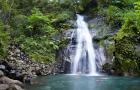
Study Reveals the Potentially Large Influences of Fungi, One of the Most Biologically Diverse Classes of Organisms, On Our Energy Supplies
A new study which includes the first large-scale comparison of fungi that cause rot decay suggests that the evolution of a type of fungi known as white rot may have brought an end to a 60-million-year-long period of coal deposition known as the Carboniferous period. Coal deposits that accumulated during the Carboniferous, which ended about 300 million years ago, have historically fueled about 50 percent of U.S. electric power generation.

The economic importance of the world's natural assets is now firmly on the political radar as a result of an international assessment showcasing the enormous economic value of forests, freshwater, soils and coral reefs, as well as the social and economic costs of their loss, was the conclusion of The Economics of Ecosystems and Biodiversity (TEEB) report launched on October 20, 2010 by TEEB study leader, Pavan Sukhdev.
A number of local authorities from around the world are already seeing the value of an ecosystems approach to planning.
Even though microbes essentially rule the Earth, scientists have never before been able to conduct comprehensive studies of microbes and their interactions with one another in their natural habitats.
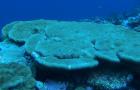
Ecosystems containing many different plant species are not only more productive, they are better able to withstand and recover from climate extremes, pests and disease over long periods, according to a new study. It is the first experiment to gather enough data--over a sufficient time and in a controlled environment--to confirm a 50-year scientific debate about whether biodiversity stabilizes ecosystems.
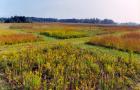
Pollution hot spots and damaged habitats and "ecosystems" are to be identified. Measures will be drawn up to reduce the threats and restore the damage. Other aims include moving to harmonized laws covering the management of the Amazon Basin.