HORIZON INTERNATIONAL SOLUTIONS SITE
Working to Find and advance solutions to environment, health, poverty, and development problems
Around the world, extreme weather events are causing the public and scientists to ask, " What is happening to our world?" Torrential floods in Mokwa, Nigeria in 2025 killed more than 700 people as water raged through the center of the city. Ferocious fires still underway today in southwest France have caused more than 300,000 people to evacuate their homes. Extreme droughts "in Ethiopia, Kenya, and Somalia have left 23 million people without reliable access to food and water," according to Islamic Relief Canada.
Such extreme "weather events' are attributed by scientist all over the world as caused by climate change. They now warn that climate change is happening faster than any previous estimates indicated.
On the 18th of June 2026, the United Nations warned that "Millions of people already facing hunger, displacement and economic hardship could soon face another major climate shock... as extreme weather risks are intensifying across some of the world’s most vulnerable regions."
Horizon International co-created the Exchange alongside USAID and organizations from across government, business, academia, and NGOs who believe that together we can tackle humanity’s greatest challenges. The Exchange is providing over 300 summaries of resources from Horizon’s Solutions Site with links to the full articles and case studies and anticipates to soon have over 600 posts from the Solutions Site’s 1,500 plus resources. Explore resources on the Exchange from Horizon International at http://www.globalinnovationexchange.org/resources/organization/3013.
The efforts of the Clean Annapolis River Project lead to preservation of the Annapolis River and its watershed in Nova Scotia, Canada, and its designation as a UNESCO Biosphere Reserve.
“Integrating the Environment in Urban Planning and Management: Key Principles and Approaches for Cities in the 21st Century,” a report launched on 8 April 2014 jointly by the United Nations Environment Programme (UNEP) and Cities Alliance at the 2014 World Urban Forum in Medellin, Colombia, says that as consumers of over 75% of natural resources, cities can be major contributors to efficiency and sustainability.
This article compares quantitative estimates for groundwater loss and glacier recession and considers the significance of their relative magnitudes. It concludes that the effect of food and agriculture, hence of population, may be significantly greater than that attributable to the global warming caused by industrial production and transport.
With the launch of five Earth-observing missions in 2014 -- more Earth-focused launches in a single year in more than a decade -- NASA will be able to deliver even more crucial data to scientists trying to understand our changing planet.
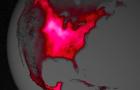
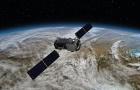
. In July 2014, NASA will launch the Orbiting Carbon Observatory-2 (OCO-2) to study the fate of carbon dioxide worldwide. Natural processes are working hard to keep the carbon cycle in balance by absorbing about half of our carbon emissions, limiting the extent of climate change. There's a lot we don't know about these processes, including where they are occurring and how they might change as the climate warms. To understand and prepare for the carbon cycle of the future, we have an urgent need to find out.
Climate change is already affecting the spread of infectious diseases--and human health and biodiversity worldwide--according to disease ecologists reporting research results in the August 2, 2013 issue of the journal Science. Modeling disease outcomes from host and parasite responses to climate variables, they say, could help public health officials and environmental managers address the challenges posed by the changing landscape of infectious disease.
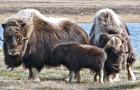
Increasing levels of atmospheric carbon dioxide alter how plants use water: Spurred by increasing levels of atmospheric carbon dioxide, forests over the last two decades have become dramatically more efficient in how they use water. "Findings from this study are important to our understanding of forest ecosystems--and how they can be managed more effectively now and in the future."
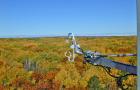
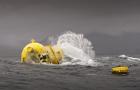
The footage was captured on April 23 this year, and shows Oyster 800 in waves over eight metres high at the European Marine Energy Centre in Orkney. "The big challenge in designing and building a wave machine is ensuring it can survive in massive waves. The video gives a good example of what we need to design for," says Aquamarine Power Chief Executive Officer Martin McAdam.