HORIZON INTERNATIONAL SOLUTIONS SITE
Working to Find and advance solutions to environment, health, poverty, and development problems
Around the world, extreme weather events are causing the public and scientists to ask, " What is happening to our world?" Torrential floods in Mokwa, Nigeria in 2025 killed more than 700 people as water raged through the center of the city. Ferocious fires still underway today in southwest France have caused more than 300,000 people to evacuate their homes. Extreme droughts "in Ethiopia, Kenya, and Somalia have left 23 million people without reliable access to food and water," according to Islamic Relief Canada.
Such extreme "weather events' are attributed by scientist all over the world as caused by climate change. They now warn that climate change is happening faster than any previous estimates indicated.
On the 18th of June 2026, the United Nations warned that "Millions of people already facing hunger, displacement and economic hardship could soon face another major climate shock... as extreme weather risks are intensifying across some of the world’s most vulnerable regions."
Together we can spread knowledge of climate emergencies and of efforts to mitigate climate change with the use of the 7.4 billion smartphones and social media. We can motivate action on every level from individuals and small farmers to mega corporations as we share immediate knowledge of climate emergencies and of positive actions on an international scale.

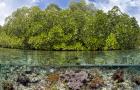
Two successful MAP projects ...are Nai Nang Village in Thailand, and the Bay of Jiquilisco in El Salvador. In both, after the initial Community-based Ecological Mangrove Restoration (CBEMR) training and restoration, the projects and conservation have been locally driven and shaped as a result of working together.
On April 1, 2021, the UN Food Systems Summit announced that more than 1,200 ideas and propositions to transform food systems were presented in just six months of public engagement.
Since September, the Summit has hosted regular online meetings, public fora and surveys organised around five priority objectives for more equitable and sustainable food systems.
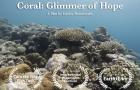
A team of scientists went to the Western Pacific Island chain of the Republic of Palau to unlock the mysteries of species that may contain a secret of adaptation for survival. The film “Coral: Glimmer of Hope” summarizes their journey and findings to date. The Republic of Palau is a country comprised of hundreds of islands.
The Authoritative Guide to Water and Sanitation Related Diseases, with Many Revised, Updated and New Chapters, Accompanies the First Edition
Augmenting authoritative interdisciplinary coverage in the first edition, this new edition of Water and Sanitation-Related Diseases and the Changing Environment expands upon the significance of the changing environment to disease vectors, food systems and nutrition, and population, and the importance of ecosystem health to human health. Many chapters stand as they are in first edition to which readers are referred, and which are not included in this volume.
In June 2020, NASA provides an updated report on fresh water availability: "Of all of the water on Earth, 97% is saltwater, leaving a mere 3% as freshwater, approximately 1% of which is readily available for our use. The world’s population is becoming more and more reliant on this precious resource for power, irrigation, industrial practices, and daily consumption." The report is available at: https://earthdata.nasa.gov/learn/toolkits/freshwater-availability
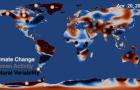
In a first-of-its-kind study, scientists have combined an array of NASA satellite observations of Earth with data on human activities to map locations where freshwater is changing around the globe and to determine why.
The study, published Wednesday in the journal Nature, finds that Earth’s wet land areas are getting wetter and dry areas are getting drier due to a variety of factors, including human water management, climate change and natural cycles.
A team led by Matt Rodell of NASA’s Goddard Space Flight Center in Greenbelt, Maryland, used 14 years of observations from the U.S./German-led Gravity Recovery and Climate Experiment (GRACE) spacecraft mission to track global trends in freshwater in 34 regions around the world.
Horizon International announces Partnership with the Global Innovation Exchange, “a global online marketplace for innovations, funding, insights, resources and conversations, allowing the world to better work together to address humanity’s greatest challenges.” The Exchange is providing summaries of resources from Horizon’s Solutions Site with links to the full articles and case studies. The founding partners include the U.S. Global Development Lab at USAID and the world’s leading donors, foundations, universities, research organizations, non-governmental organizations, and news media. View a comprehensive and growing list of partners.
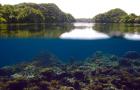
Scientists are studying coral reefs in areas where low pH is naturally occurring to answer questions about ocean acidification, which threatens coral reef ecosystems worldwide. A new study led by scientists at the Woods Hole Oceanographic Institution (WHOI) found that coral reefs in Palau seem to be defying the odds, showing none of the predicted responses to low pH except for an increase in bio-erosion--the physical breakdown of coral skeletons by boring organisms such as mollusks and worms.
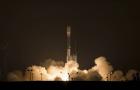
"Scientists and policymakers will use SMAP data to track water movement around our planet and make more informed decisions in critical areas like agriculture and water resources," said NASA Administrator Charles Bolden. SMAP also will detect whether the ground is frozen or thawed. Detecting variations in the timing of spring thaw and changes in the length of the growing season will help scientists more accurately account for how much carbon plants are removing from Earth's atmosphere each year.